
A restricted key is usually ordered through the locksmith, security provider or authorised supplier responsible for the restricted key system. If you are not sure what makes it different from a normal key, start with what is a restricted key?. If you need to find a locksmith more generally, the Master Locksmiths directory can help with Australian searches, but a restricted key may still need the locksmith authorised for that specific system.
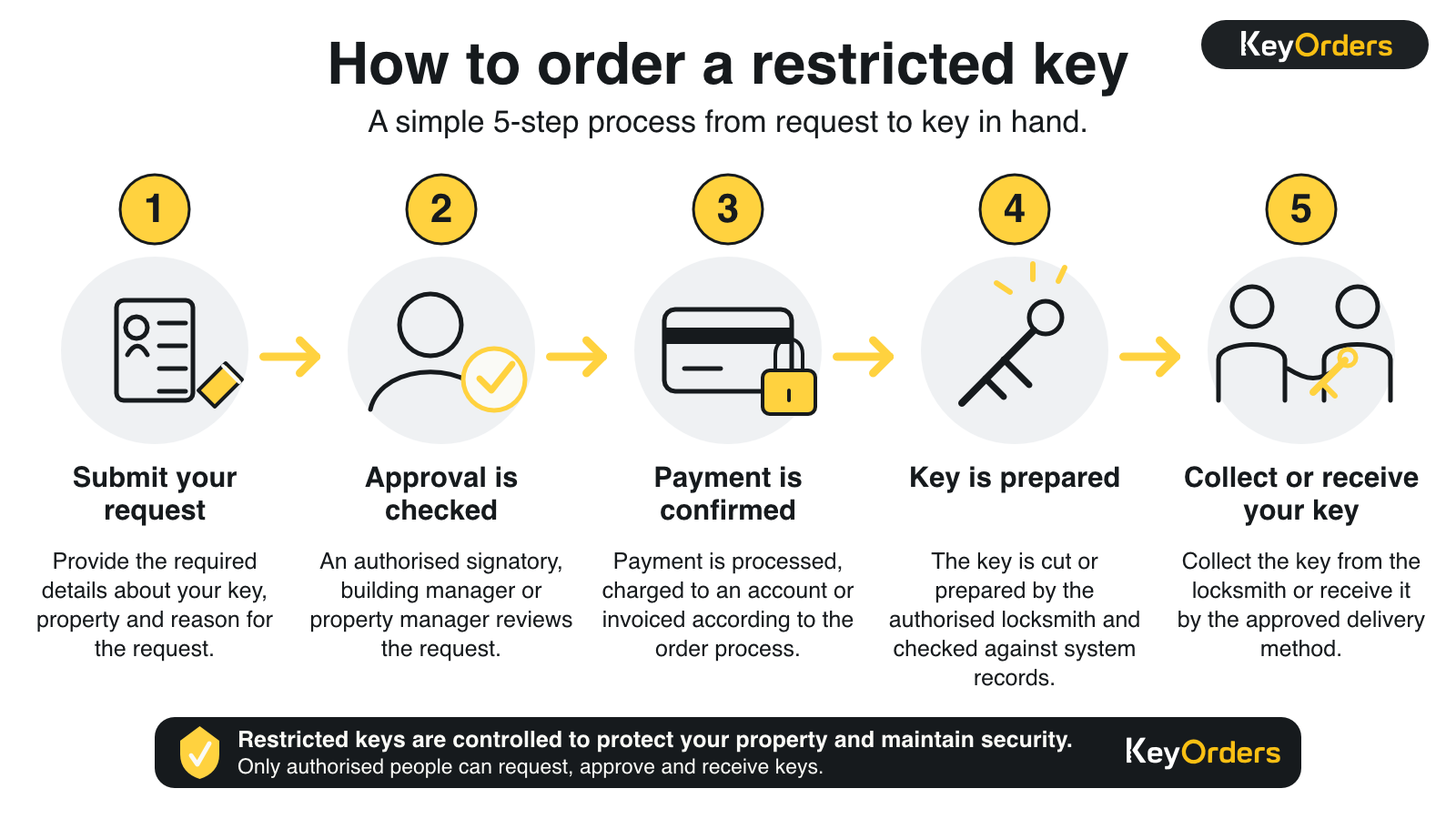
Unlike a standard key, a restricted key generally cannot be copied casually at any key-cutting counter. The order may need to be checked against the restricted key system records and approved by an authorised person before the key can be supplied.
The usual restricted key ordering process
The exact process depends on the locksmith, building, property manager or system owner, but restricted key orders commonly follow a pattern like this:
- The requester identifies the key or building access requirement.
- The locksmith or authorised supplier checks the restricted key system.
- The requester provides required details, such as key number, site details and quantity.
- An authorised signatory or responsible manager may need to approve the order.
- Payment is arranged, depending on the locksmith’s process.
- The locksmith cuts, prepares or supplies the key.
- A record is kept of the key being issued.
For apartments, commercial sites and managed buildings, the person requesting the key may not be the same person who can approve the key. This is one reason restricted key orders can become slow or confusing when handled through paper forms and email chains. For a fuller explanation, see why restricted keys need approval.
Who can approve a restricted key order?
Approval usually depends on how the restricted key system is managed.
An authorised person may be:
- a building manager
- an owners corporation or strata manager
- a property manager
- a facility manager
- a business owner or site manager
- another authorised signatory recorded against the system
If you are a tenant, resident or employee, you may need approval before a locksmith can supply the key.
Important: Online ordering should not bypass restricted key approval. It should make the authorised process easier to follow and record.
What information may be needed?
A restricted key order may require details such as:
- your name and contact details
- the building, site or property address
- the restricted key system number, where applicable
- the key number or marking, where applicable
- the quantity required
- the reason for the request
- the authorised signatory or approving person
- collection or delivery preference
- payment method or account details
Do not send sensitive restricted key details, system numbers or payment card details through insecure channels unless the locksmith or authorised supplier has provided a safe process. For a more detailed breakdown, see restricted key order forms: what should be included?.
Why restricted key orders can be difficult
Restricted key ordering often involves more than one person.
For example:
- a tenant may request the key
- a property manager may need to approve it
- an owners corporation manager may be responsible for the building
- the locksmith may need to check the system records
- someone else may pay for the order
- the key may be collected or sent to another person
When this is handled by PDF forms, scanned documents or email chains, details can be missed and order status can become unclear. This is one reason restricted key orders should not rely on paper forms.
Email can also create privacy concerns. Even if a message is encrypted while it is being sent, completed forms and attachments may still remain in inboxes, sent folders, local mail apps and forwarded threads after delivery.
What a good restricted key ordering process should provide
A good process should make it clear:
- who is requesting the key
- which site or system the key relates to
- who is authorised to approve the order
- whether approval has been received
- whether payment is required or complete
- how the key will be collected or delivered
- what record exists of the key being supplied
Restricted key ordering should be controlled, but it should also be clear and easy to follow.
Where KeyOrders fits
KeyOrders is being developed to help locksmiths offer a structured online process for restricted key orders.
Instead of relying on paper forms, scanned PDFs or unclear email chains, KeyOrders is designed to help locksmith businesses collect order details, manage approvals, track payment status and keep clearer records. For the locksmith-side workflow, see best way for locksmiths to manage restricted key orders online.
For locksmiths, this can reduce manual follow-up and make restricted key orders easier to action.
For customers, tenants, managers and authorised signatories, it can provide a clearer way to submit and track requests.