
A restricted key is a key that belongs to a controlled key system. It is not usually treated like a standard house key, where someone can walk into a key-cutting shop and ask for a copy.
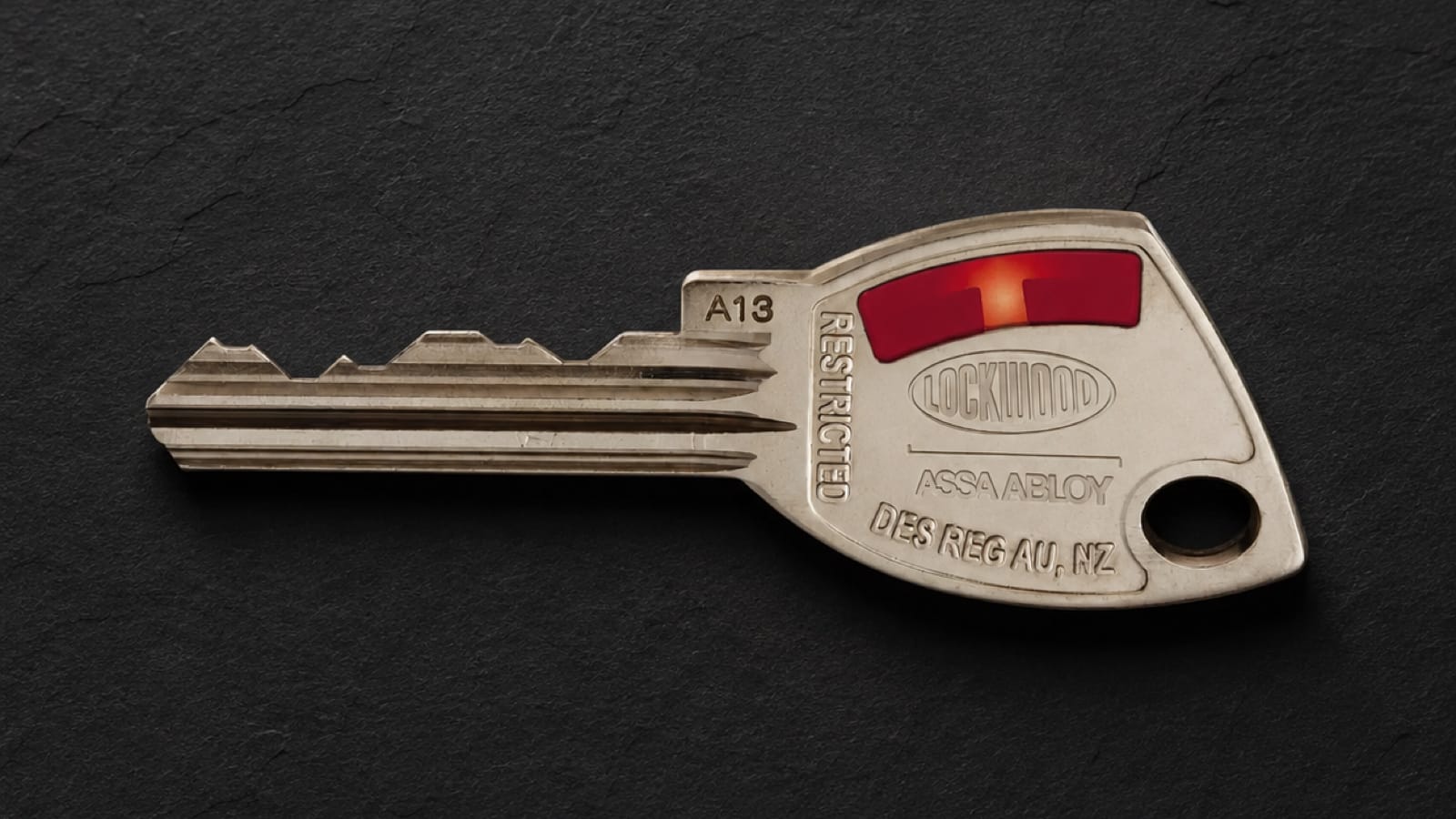
Instead, restricted keys are managed through an authorised process. That process usually controls who can request extra keys, who can approve them, and which locksmith or supplier is allowed to cut them.
Restricted keys are commonly used in apartment buildings, commercial properties, schools, offices, managed facilities and other sites where access needs to be controlled properly.
A restricted key is only one part of the system. The records, approvals and ordering process behind it are what make the system controlled. If you need to request one, see how to order a restricted key.
Note: The restriction is not only the shape of the key. The approval process, authorised supplier and key records are what make the system controlled.
For an Australian industry reference point, the Locksmiths Guild of Australia Code of Practice describes restricted key procedures as including records of keys cut, the identity of people receiving them, controlled electronic records and secure storage of restricted key blanks.
Why restricted keys exist
Restricted key systems are used when key control matters.
In a normal key system, copies can often be made with very little checking. That can become a problem in buildings or sites where many people need access, but not everyone should be able to create more keys.
A restricted key system helps reduce that risk by requiring key orders to go through an authorised locksmith, security provider or supplier. Before cutting a key, the supplier may need to check the system records and confirm that the person requesting the key is allowed to order it.
Restricted keys are often used in:
- apartment buildings
- owners corporation or strata properties
- offices and commercial sites
- schools and education facilities
- warehouses and industrial sites
- hospitals, clinics and care facilities
- government or community buildings
- managed rental properties
The aim is not just to stop copies being made. It is also to make sure there is a clear process for issuing, approving and recording keys.
How restricted keys are different from standard keys
A standard key can often be copied by many key-cutting services. If someone has the key, they may be able to get another one made.
A restricted key is different because new keys are supplied under rules set by the key system. Depending on the system, the locksmith or authorised supplier may need to confirm:
- which restricted key system the key belongs to
- whether the person requesting the key is authorised
- whether an authorised signatory has approved the order
- how many keys are being issued
- who will receive the key
- whether the key records need to be updated
This makes the ordering process more important than a simple key copy.
What is a restricted key system?
A restricted key system is made up of keys, cylinders, records and rules.
The rules usually cover things like:
- who can order keys
- who can approve key orders
- which locksmith or supplier can cut the keys
- which keys open which doors
- how issued keys are recorded
- what happens when keys are lost, returned or replaced
The physical key is only one part of the system. Without a reliable process behind it, the system can become difficult to manage.
Who can order a restricted key?
Who can order a restricted key depends on the system and the organisation responsible for it.
In some cases, an authorised signatory can place the order directly. In other cases, a tenant, resident, employee or contractor may request a key, but the order still needs to be approved by someone responsible for the site.
That person might be a:
- property manager
- owners corporation or strata manager
- building manager
- facility manager
- business owner
- authorised site representative
This is why restricted key orders often involve more than one person. There may be a requester, an approver, a payer, a recipient and the locksmith or authorised supplier handling the order.
A good ordering process should make each of these roles clear.
Why approval matters
Approval is one of the main parts of a restricted key system.
If keys are issued without proper authority, the system can quickly lose its value. There may be more keys in circulation than expected, records may become inaccurate, and the people responsible for the building may no longer have a clear view of who has access.
Approval helps make sure that new keys are only issued when the right person or organisation has allowed it. For more detail, see why restricted keys need approval.
Why record-keeping matters
Restricted key orders should leave a clear record.
Depending on the system, the locksmith or site manager may need to know:
- who requested the key
- who approved the key
- which key was supplied
- how many keys were supplied
- when the order was completed
- whether payment was received
- whether the key was collected or delivered
This can be hard to manage when orders come through paper forms, scanned documents, phone calls and long email threads. A structured form or workflow should capture the right information from the start; see restricted key order forms: what should be included?.
Over time, small gaps in the process can create bigger problems. Records become harder to check, approvals are harder to trace, and staff may need to spend more time confirming details before an order can move ahead.
Restricted keys and online ordering
Restricted keys are controlled products, but the ordering process does not have to be entirely manual.
An online ordering process can help collect the right details at the start, route approvals to the right person, show payment status and keep a cleaner record of each order.
For locksmiths, this can reduce back-and-forth and make orders easier to process. For the business case, see why locksmiths should offer online restricted key ordering.
For customers, property managers and building managers, it can make the process clearer, faster and more consistent.
Where KeyOrders fits
KeyOrders is an online ordering and approval platform being developed for locksmiths who manage restricted key systems.
It is designed to help locksmith businesses move restricted key requests out of paper forms and email threads, and into a structured workflow for order details, approvals, payment status, fulfilment and records.